
#guide
25 articles on guide.
From TGE to Tier-1 in 90 Days: A Market Making Playbook
An illustrative 90-day playbook for taking a token from launch to a tier-1 exchange listing — how DEX liquidity, market stabilization, and a track record come together. A representative example, not a specific client.
CEX vs. DEX Market Making: What's the Difference?
CEX market making quotes two-sided orders on an exchange order book; DEX market making supplies and actively manages assets in an AMM liquidity pool. Here is how each works, the risks, and why most tokens need both.
Red Flags in a Market Maker Contract: What to Watch For
Before signing a crypto market maker, watch for oversized token loans, deep in-the-money options, guaranteed-volume promises, vague KPIs, and lock-in with no exit. Here is a checklist of contract red flags and the green flags to look for instead.
Loan vs. Retainer: How Market Maker Deals Are Structured
Crypto market makers are usually paid in one of two ways: a fixed monthly retainer, or a token loan plus call options. Here is how each model works, the trade-offs, and how to choose the right structure for your token.
What a CEX Actually Requires to List Your Token
Beyond the application, a centralized exchange expects legal/KYB documents, credible tokenomics, a security audit, a market making commitment, and evidence of real community and volume. Here is the requirements checklist to prepare against.
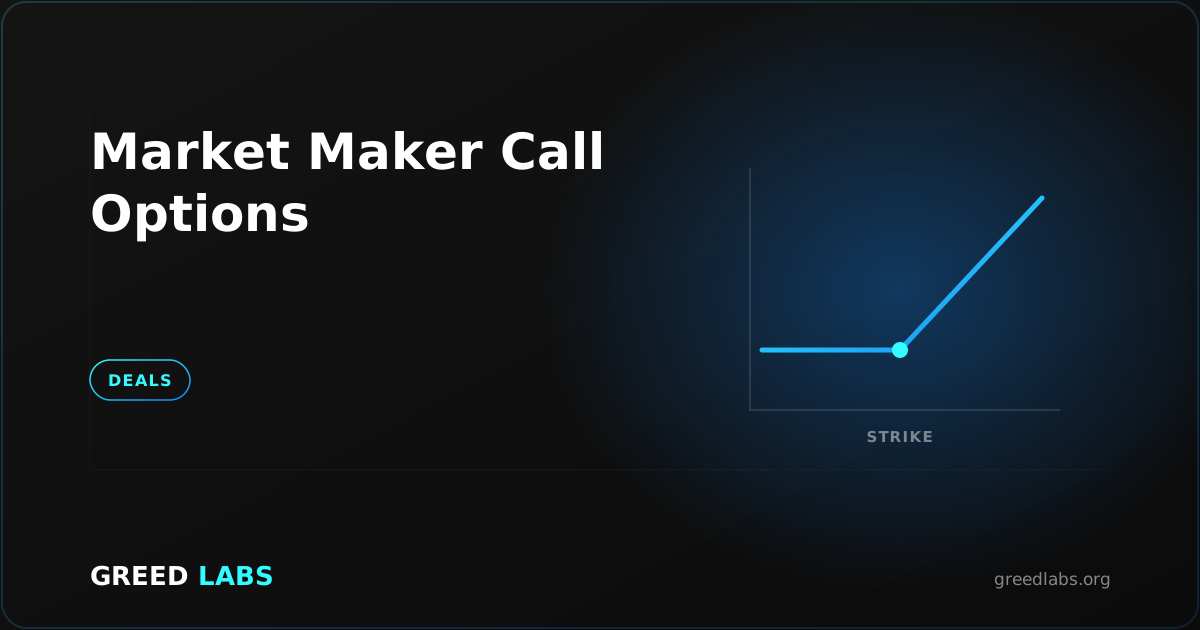
Market Maker Call Options: How They Work (and Fair Terms)
In a token loan deal, a market maker is often paid with call options — the right to buy loaned tokens later at preset strike prices. Here is how the instrument works, what fair strikes and sizing look like, and the terms to push back on.
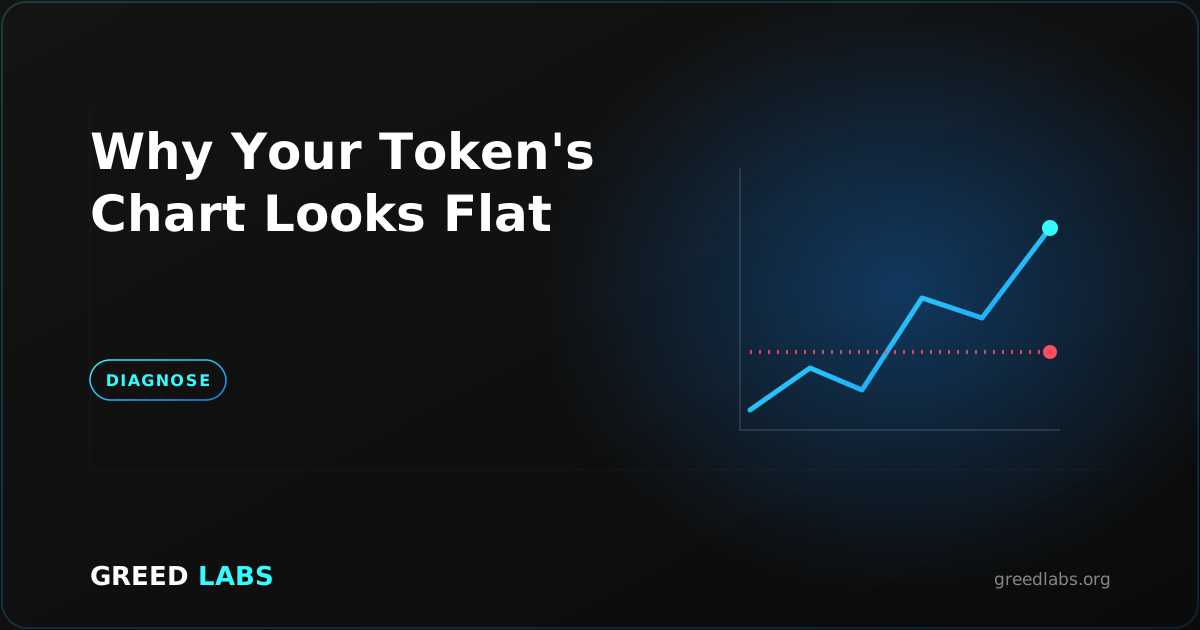
Why Your Token's Chart Looks Flat: 6 Liquidity Causes
A flat, lifeless token chart is usually a liquidity problem: no market maker, wide spreads, a thin order book, uptime gaps, fragmented venues, or concentrated supply. Here is how to diagnose and fix a dead chart.
CEX or DEX First: Where Should a New Token Launch?
Most tokens launch on a DEX first — no listing approval, instant trading, and on-chain price discovery — then add CEX listings for reach. Here is how to decide the right launch sequence for your token.
How to Detect Fake Trading Volume (5 Signals)
Fake crypto volume shows up as a high volume-to-liquidity ratio, thin order books behind huge reported numbers, uniform trade patterns, and gaps between reported and on-chain activity. Here is how to spot wash trading before it costs you.
What Is a Liquidity Lock (and How It Prevents Rugs)?
A liquidity lock places LP tokens in a time-locked contract so a team can't pull the pool's liquidity — the main defense against a rug pull. Here is how locks work, what they prove, and what they don't guarantee.
How to Set Up a Liquidity Pool for a DEX Launch
Setting up a liquidity pool means choosing a pair and venue, setting the opening price and depth, and — on concentrated-liquidity AMMs — a price range. Size and range decide how much slippage early traders face. Here is the step-by-step.
How to Set Your Token's Opening Price at TGE
Your token's opening price is set by the ratio of assets in your initial liquidity, and it anchors everything that follows. Set it too high and it dumps; too low and you invite instant arbitrage. Here is how to choose it.
Tier-1 vs. Tier-2 Exchange Listings: Is It Worth It?
Tier-1 exchanges offer the largest audiences but demand high fees, strict requirements, and strong market making commitments. Tier-2 exchanges are more accessible with less reach. Here is how to weigh them and sequence your listings.
How to Read a Market Maker's KPI Report
A market maker's KPI report is how you verify the service is real. It should show spread, depth, uptime, and volume against agreed targets. Here is what each metric means, what good looks like, and the reporting red flags to watch.
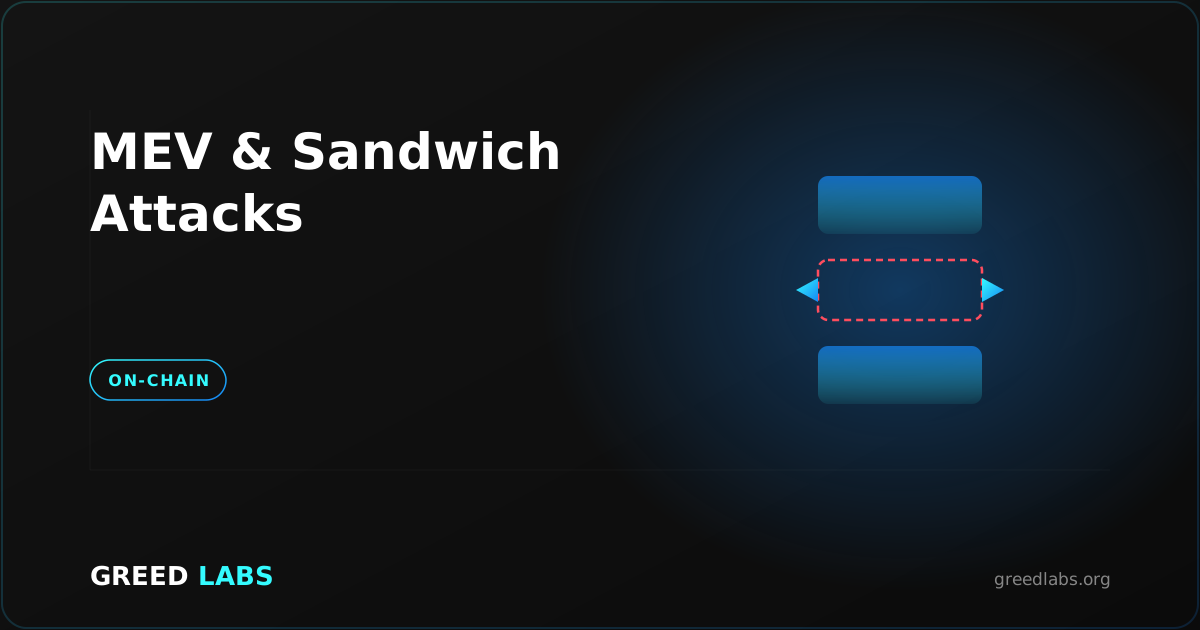
MEV and Sandwich Attacks: What Token Teams Should Know
MEV is value that block producers and bots extract by reordering or inserting transactions. The most common form that hurts your traders is the sandwich attack. Here is how it works and how deeper liquidity reduces it.
Volume-to-Liquidity Ratio Explained
The volume-to-liquidity ratio compares a token's trading volume to the depth supporting it — a fast read on whether activity is proportionate. Here is how to calculate it, how to interpret the ranges, and where it misleads.
Token Holder Distribution: What Healthy Looks Like
Healthy token holder distribution means supply spread across many independent wallets, not concentrated in a few. Concentration is a liquidity and dump risk. Here is what healthy looks like and how to check yours.
TVL vs. Liquidity: What's the Difference?
TVL measures how much value is deposited in a protocol or pool; liquidity measures how easily a token trades without moving its price. A pool can have high TVL and still be illiquid for your token. Here is the difference and why it matters.
Crypto Market Making Bots: How Automated Liquidity Works
A market making bot continuously places and updates buy and sell orders from rules and live market data, providing liquidity faster than any human. Here is how they work, and why the strategy and risk management matter more than the bot itself.
Designated Market Maker vs. Prop Trading Firm
A designated market maker is hired to provide committed liquidity for your token; a prop trading firm trades its own capital for its own profit, with no obligation to support your market. Here is the difference and which your token needs.
Crypto Market Making Glossary: 30+ Terms Explained
A plain-English glossary of crypto market making terms — order book, bid-ask spread, slippage, depth, AMM, wash trading, token loan, call option, and the deal terms every token project should know.
What Is Order Book Depth (and Why It Matters)?
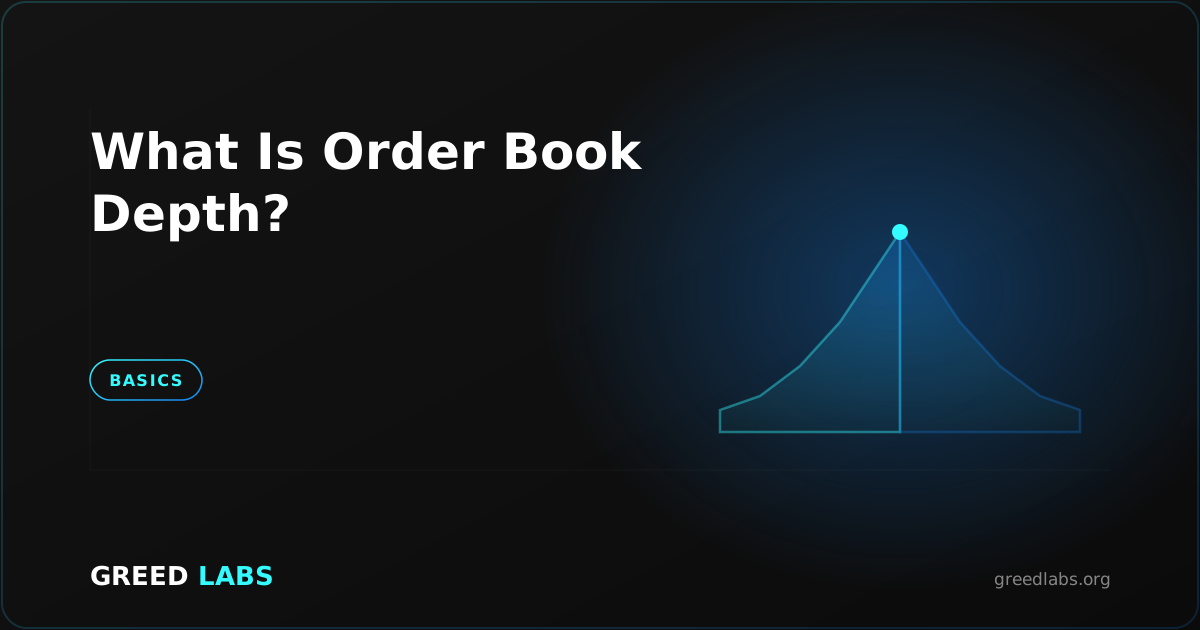
Order book depth is how much buy and sell size rests near the current price. Deep books absorb large orders with little movement; thin books mean even small trades cause big slippage. Here is why depth matters for your token.
What Is the Bid-Ask Spread? (And Who Sets It)
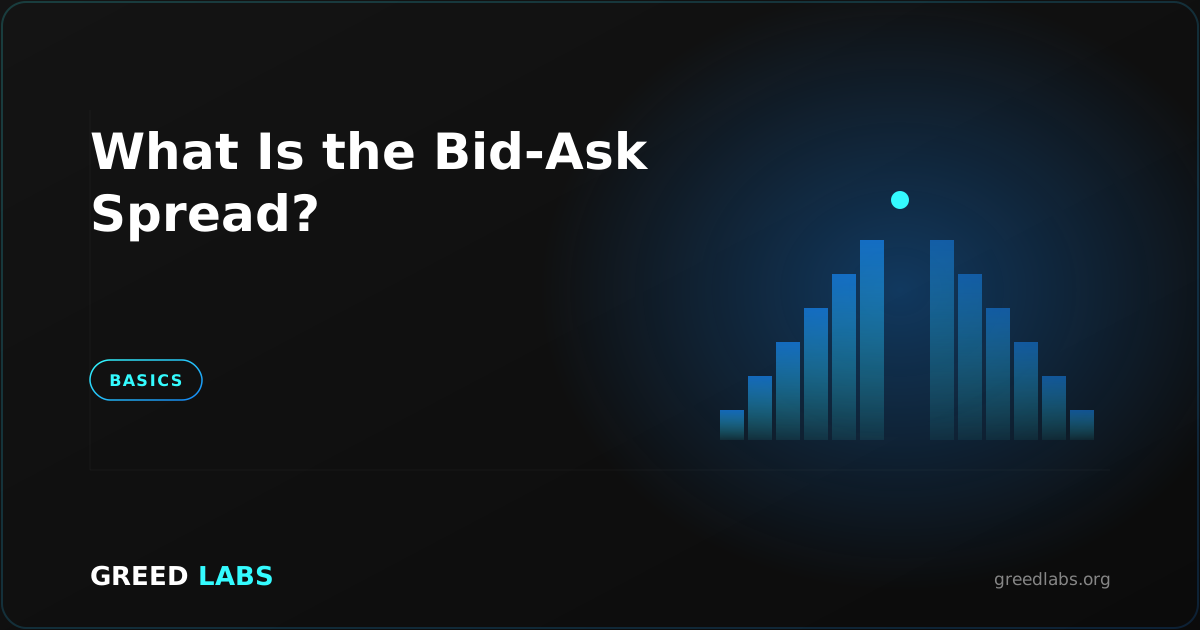
The bid-ask spread is the gap between the highest price a buyer will pay and the lowest a seller will accept. It's the most immediate measure of a token's liquidity and trading cost — and market makers keep it tight.
How to Choose a Crypto Market Maker: A 7-Point Checklist
Choosing a crypto market maker comes down to venue coverage, transparent reporting, compliant volume, and fair pricing. Use this checklist to evaluate any provider.
Token Launch Checklist: From Contract to Listing
A complete token launch checklist covering smart contract, liquidity, market making, listings, and post-TGE growth — everything a project needs before and after TGE.


GET A FREE CONSULTATION
Tell us about your project and we'll respond within 24 hours.