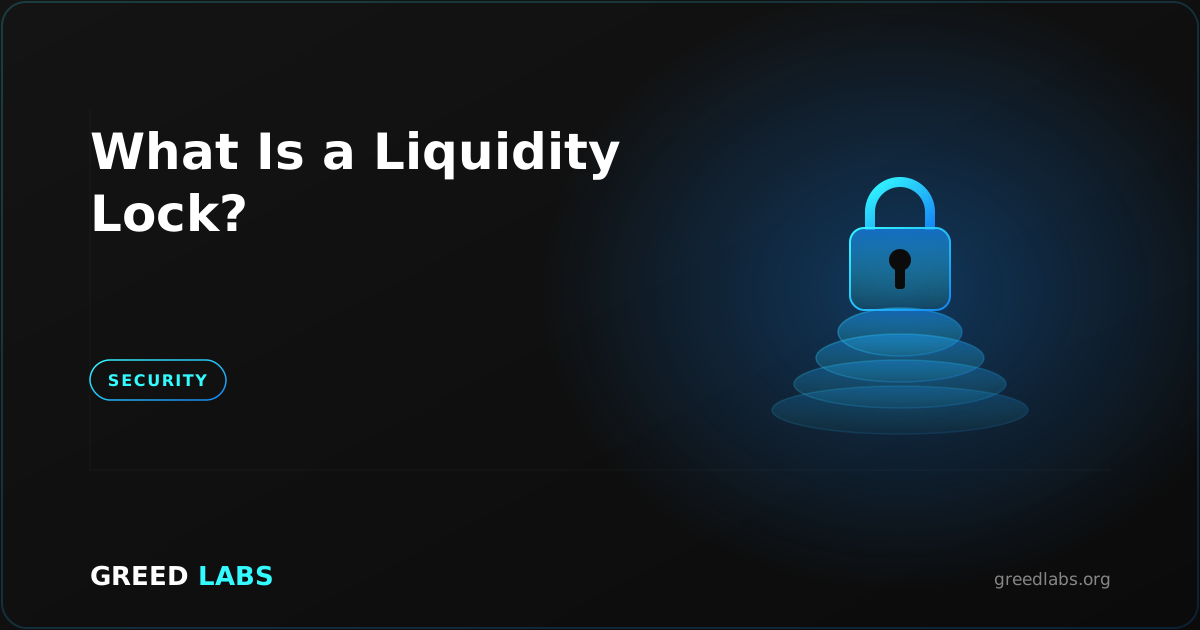
A liquidity lock places the LP tokens that represent a pool's liquidity into a time-locked contract, so the team cannot withdraw that liquidity until the lock expires. It's the main defense against a "rug pull." Locks build trust, but they prove one specific thing — not that a token is healthy or safe overall.
What a rug pull is
A rug pull is when a team drains the liquidity backing a token, leaving holders with tokens they can no longer sell at any real price. It's one of the most common scams in on-chain markets, and it's exactly what a liquidity lock is designed to prevent.
How a liquidity lock works
When you provide liquidity to an AMM pool, you receive LP tokens representing your share. Whoever holds those LP tokens can withdraw the underlying liquidity. A lock sends those LP tokens to a time-locked contract (a "locker") that won't release them until a set date — so no one can pull the pool in the meantime. See the glossary for the underlying terms.
What a lock proves
- The team can't drain that liquidity for the lock's duration.
- A public, verifiable commitment that holders can check on-chain.
What a lock does NOT guarantee
- Depth — a locked pool can still be thin, leaving traders with heavy slippage.
- Price stability — locking doesn't create a healthy, tradable market on its own. See Why Your Token's Chart Looks Flat.
- Fair supply — other tokens can still be concentrated in a few wallets. Check with What Is Bubblemaps?.
The takeaway
Treat a liquidity lock as necessary but not sufficient. It removes one clear risk, but a trustworthy token still needs real depth, sensible distribution, and an actively maintained market — the things a lock can't provide by itself.
Locking liquidity protects holders from a rug; building and maintaining real depth is what makes the market worth trading — and that second part is where we come in.