
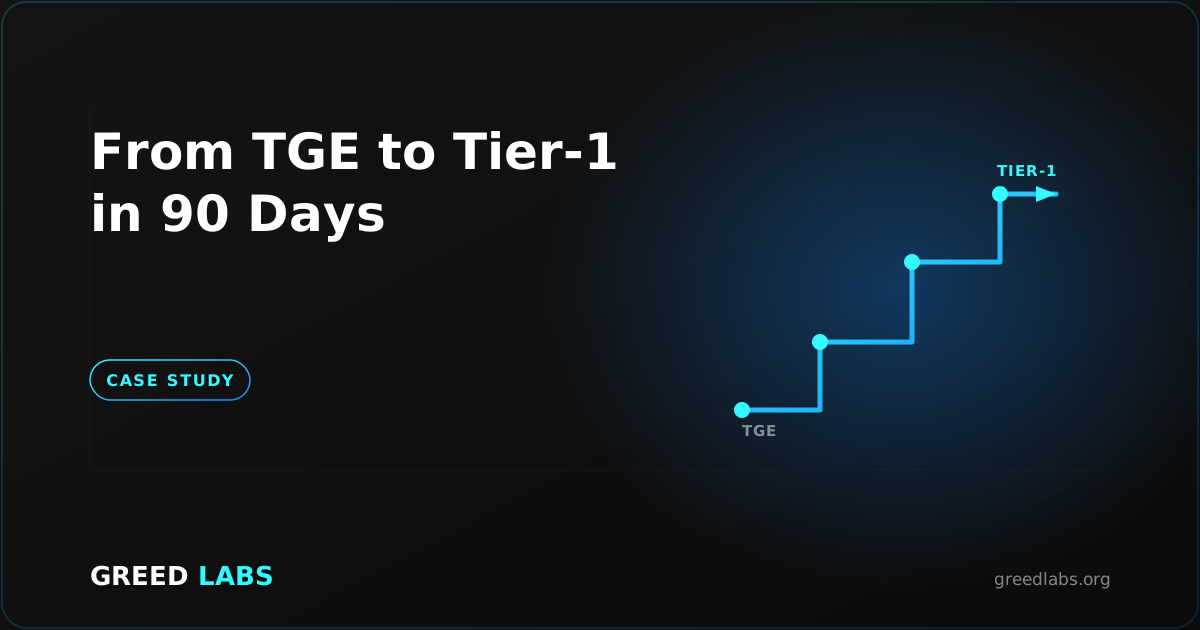
This is an illustrative 90-day playbook for taking a token from TGE to a tier-1 exchange listing — a representative example of how the pieces of a market making engagement fit together. It is not a specific client or a set of real numbers; timelines and outcomes vary. What's consistent is the sequence: build a real market first, earn the track record, then pursue the listing.
Days 0–7 — TGE and DEX liquidity
Launch begins on-chain. A properly sized, actively managed liquidity pool carries early price discovery, so the first traders don't hit painful slippage. See How to Set Up a Liquidity Pool and How to Set Your Token's Opening Price. Why DEX first? See CEX or DEX First.
Weeks 2–4 — Stabilize the market
With the token trading, the focus shifts to market quality: tightening the spread, maintaining depth on both sides, and keeping quote uptime high across venues. The chart stops gapping and starts behaving like a real market. This is the groundwork a listing committee looks for.
Month 2 — Tier-2 listings and a track record
Accessible listings extend reach and, crucially, build a verifiable record of organic activity — real volume proportionate to real depth, not fabricated numbers. See Tier-1 vs. Tier-2 Exchange Listings. That record is the evidence a tier-1 venue will scrutinize.
Month 3 — The tier-1 application
Now the requirements matter: legal and KYB, audited contract, healthy holder distribution, and a market making commitment the exchange can rely on. See What a CEX Actually Requires to List Your Token. A token with a genuinely healthy market walks in with its strongest argument already made.
The through-line
Every step rests on the same foundation — a real, well-made market. Fake volume and thin liquidity can't be faked past a tier-1 review; a genuine track record can't be rushed, but it can be built deliberately. Fit the whole sequence into the broader Token Launch Checklist, and check any terms in the glossary.
Building the market that makes this path possible — from TGE liquidity to a listing-grade track record — is exactly what we do.