
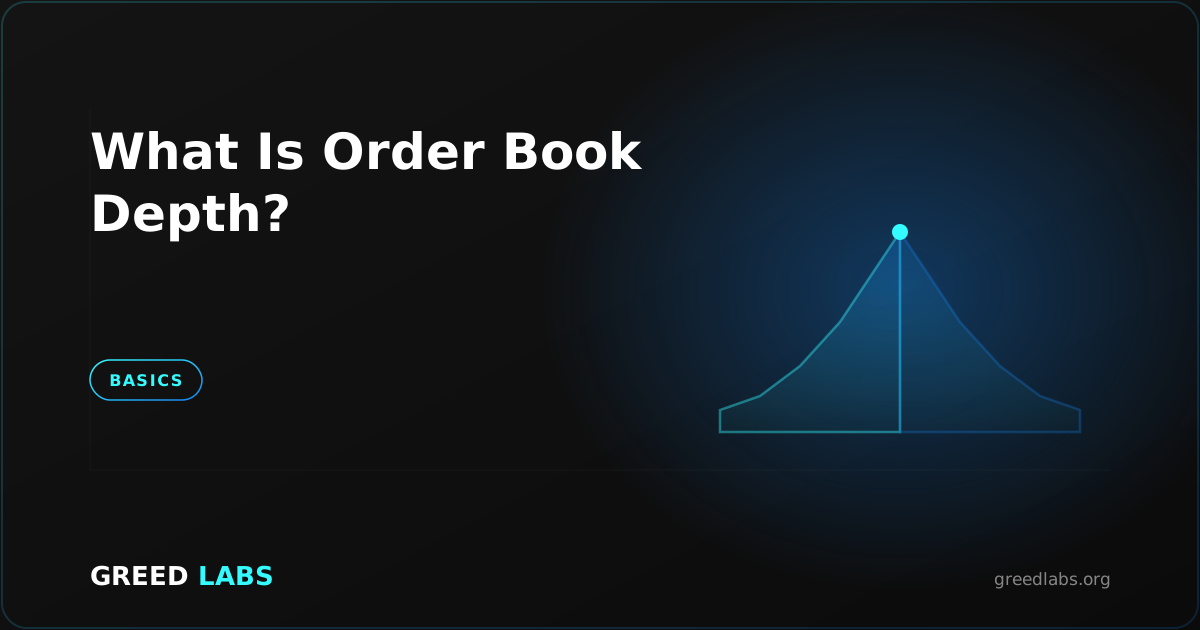
Order book depth is how much buy and sell size is resting near the current price. Deep books absorb large orders with little price movement; thin books mean even small trades cause big slippage. Depth is what makes a market feel solid rather than fragile.
What depth is
Look past the best bid and ask, and you see size stacked at each price level. Depth is the total of that resting size near the current price. The more there is, the larger an order the market can absorb before the price moves. See the glossary for the underlying terms.
Depth vs. spread
They're related but distinct:
- Spread — the cost to trade a tiny amount (the gap between best bid and ask).
- Depth — how much you can trade before moving the price.
A market can show a tight spread and still be shallow — fine for small trades, painful for large ones. Healthy markets need both.
Why depth matters
Thin depth means high slippage: a normal-sized order walks the book and executes at a bad average price. That scares off larger traders, invites sandwich attacks, and leaves the chart fragile. See Why Your Token's Chart Looks Flat.
What healthy depth looks like
Enough resting size on both sides that ordinary buy and sell pressure is absorbed smoothly, without violent swings — sized against your expected volume per How Much Liquidity Does Your Token Need Before TGE?.
How depth is built
By a market maker continuously placing and replenishing sized orders near the price. See What Is Crypto Market Making?. Depth isn't a deposit you make once; it's liquidity that stays present as trades consume it.
Spread is what traders notice first; depth is what holds the market together underneath — and building both is the job.