
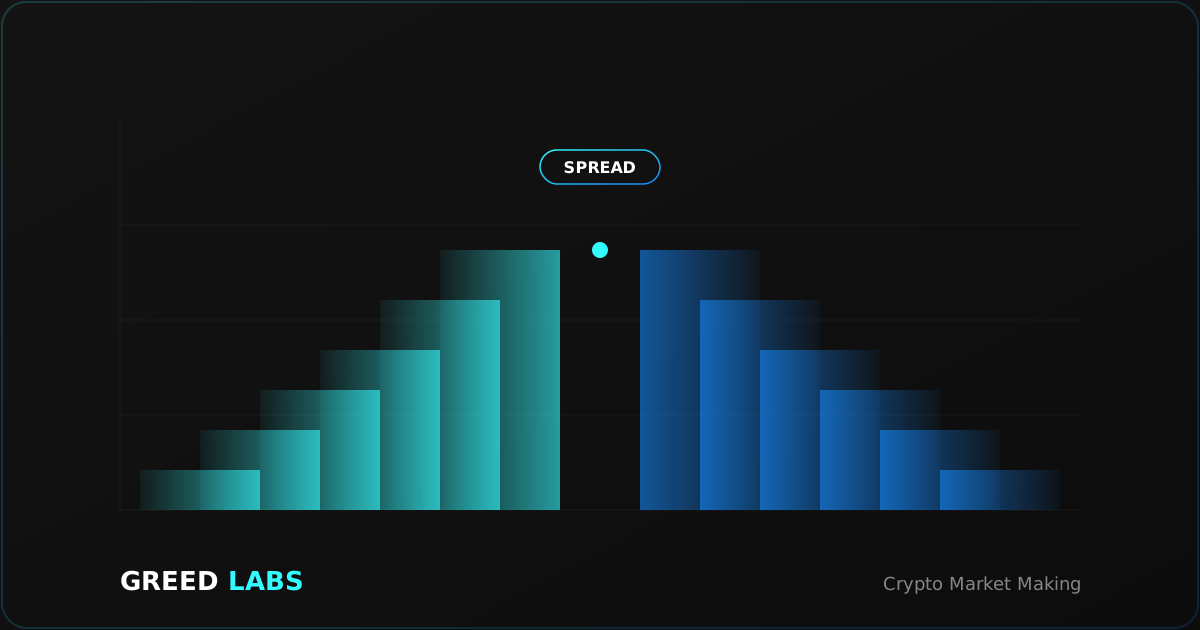
Crypto market making is the practice of continuously quoting both buy and sell orders for a token so that it stays liquid, spreads stay tight, and traders can enter or exit positions without large price impact. Without a market maker, a token's order book is thin, prices gap wildly, and buyers are scared off.
This guide explains what market makers do, why token projects use them, and how to evaluate one.
How market making works
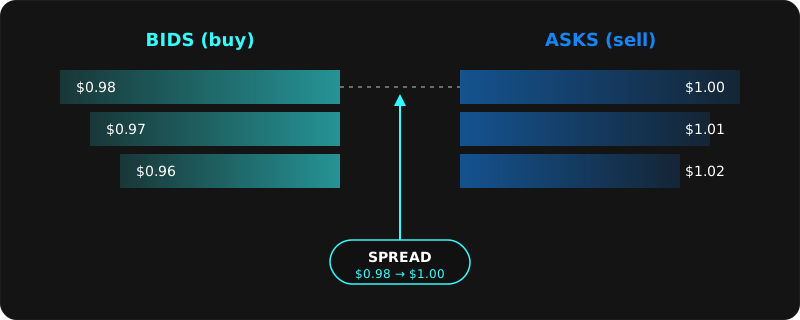
A market maker places limit orders on both sides of the order book:
- Bid orders — offers to buy at slightly below the mid price
- Ask orders — offers to sell at slightly above the mid price
The difference between the best bid and best ask is the spread. A market maker's job is to keep that spread tight and the book deep, updating quotes continuously as the market moves.
| Without a market maker | With a market maker |
|---|---|
| Wide, unpredictable spreads | Tight, stable spreads |
| Thin order book, high slippage | Deep book, low price impact |
| Buyers hesitant to enter | Confident, tradable market |
Why token projects need one
- Liquidity at launch — a new token has no natural order flow; a market maker bootstraps it.
- Tighter spreads — lower trading costs attract more traders.
- Exchange requirements — many CEX listings require a market making commitment.
- Price stability — depth absorbs large orders without violent swings.
How to evaluate a market maker
- Which CEX and DEX venues and chains do they cover?
- Do they provide transparent weekly reporting (spread, volume, depth)?
- Is their volume organic and compliant, not wash trading?
- Can they support your token launch / TGE timeline?