
In a token loan deal, a market maker is often compensated with call options — the right to buy loaned tokens later at preset strike prices. Understanding strikes, sizing, and expiry is how you avoid handing over more upside than the service is worth. This is the deep dive on the instrument itself; for how it fits against the alternative (a cash retainer), see Loan vs. Retainer.
What a call option is here
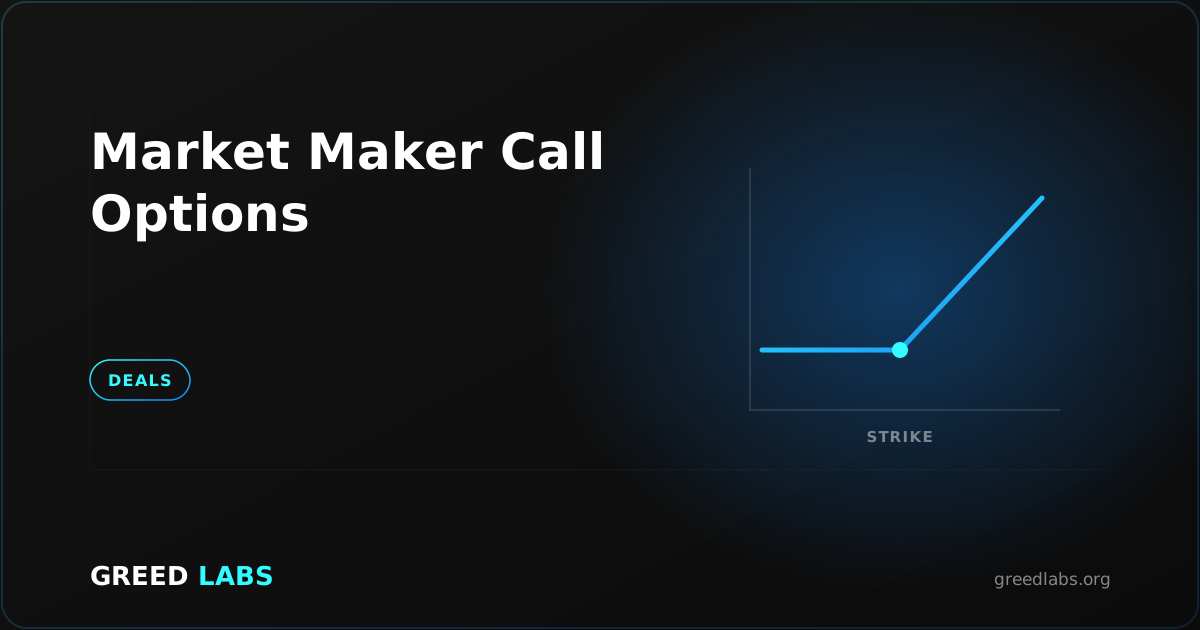
A call option gives the market maker the right, not the obligation, to buy a set amount of your tokens at a fixed strike price before an expiry. If the token is above the strike, the option is valuable; if below, it simply goes unused.
How it compensates the market maker
Their profit is the gap between the market price and the strike. So the option is worth more as your token appreciates — which is the point: it ties their upside to your token's performance rather than charging you cash upfront. See the glossary for definitions.
- In-the-money (ITM) — market price above strike; option has value now.
- Out-of-the-money (OTM) — market price below strike; no value yet.
Why projects use it
- Low upfront cash — useful for token-rich, cash-poor teams.
- Aligned incentives — the market maker benefits when the token does well.
What fair terms look like
- Strikes laddered above the current price — so the market maker earns only on genuine appreciation.
- Capped size — a defined, limited amount of supply under option.
- Clear expiry — a bounded time window, not open-ended.
Terms to push back on
- Deep in-the-money strikes — cheap upside handed over on day one.
- Oversized grants — too much supply under option.
- No expiry or caps — open-ended exposure.
These are exactly the kind of clauses covered in Red Flags in a Market Maker Contract.
Structured well, call options fund liquidity while keeping everyone pointed at the same goal — and structuring them fairly is part of how we work.