
#liquidity
11 articles on liquidity.
Why Your Token's Chart Looks Flat: 6 Liquidity Causes
A flat, lifeless token chart is usually a liquidity problem: no market maker, wide spreads, a thin order book, uptime gaps, fragmented venues, or concentrated supply. Here is how to diagnose and fix a dead chart.
What Is a Liquidity Lock (and How It Prevents Rugs)?
A liquidity lock places LP tokens in a time-locked contract so a team can't pull the pool's liquidity — the main defense against a rug pull. Here is how locks work, what they prove, and what they don't guarantee.
How to Set Up a Liquidity Pool for a DEX Launch
Setting up a liquidity pool means choosing a pair and venue, setting the opening price and depth, and — on concentrated-liquidity AMMs — a price range. Size and range decide how much slippage early traders face. Here is the step-by-step.
How to Set Your Token's Opening Price at TGE
Your token's opening price is set by the ratio of assets in your initial liquidity, and it anchors everything that follows. Set it too high and it dumps; too low and you invite instant arbitrage. Here is how to choose it.
MEV and Sandwich Attacks: What Token Teams Should Know
MEV is value that block producers and bots extract by reordering or inserting transactions. The most common form that hurts your traders is the sandwich attack. Here is how it works and how deeper liquidity reduces it.
Volume-to-Liquidity Ratio Explained
The volume-to-liquidity ratio compares a token's trading volume to the depth supporting it — a fast read on whether activity is proportionate. Here is how to calculate it, how to interpret the ranges, and where it misleads.
TVL vs. Liquidity: What's the Difference?
TVL measures how much value is deposited in a protocol or pool; liquidity measures how easily a token trades without moving its price. A pool can have high TVL and still be illiquid for your token. Here is the difference and why it matters.
What Is Order Book Depth (and Why It Matters)?
Order book depth is how much buy and sell size rests near the current price. Deep books absorb large orders with little movement; thin books mean even small trades cause big slippage. Here is why depth matters for your token.
How Much Liquidity Does Your Token Need Before TGE?
The liquidity a token needs at launch depends on target venues, expected trading volume, and acceptable price impact. Here's how to size it correctly.
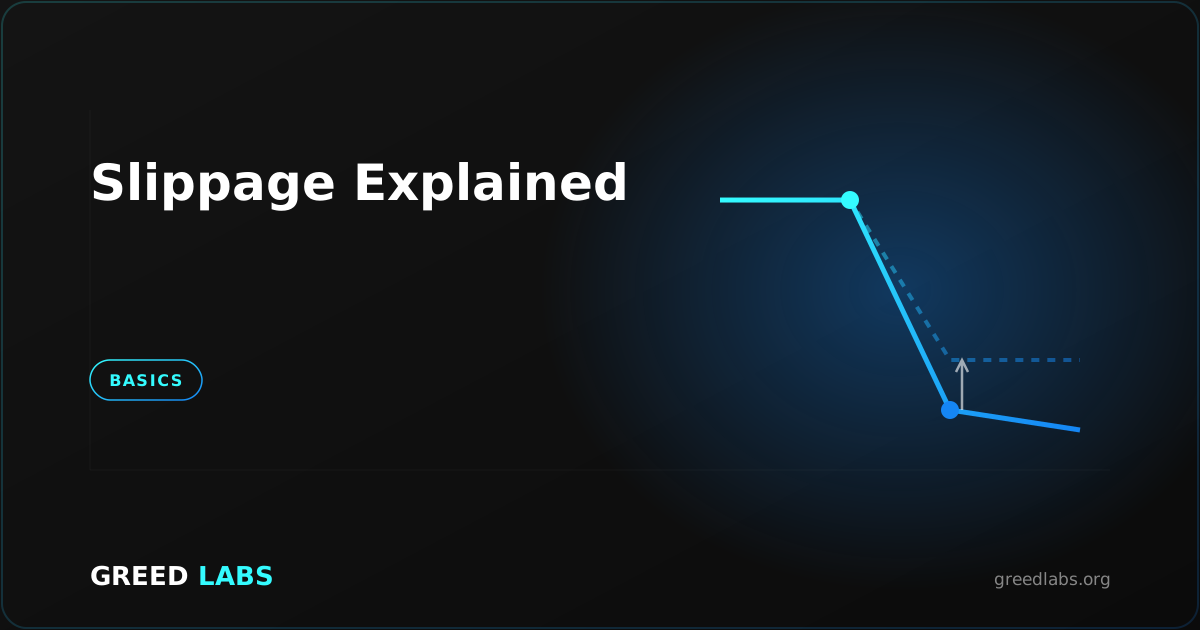
Slippage Explained (and How to Reduce It)
Slippage is the difference between the expected price of a trade and the price it actually executes at. It's caused by thin liquidity and volatility — here's how to reduce it.
What Is Crypto Market Making? A Complete Guide for Token Projects
Crypto market making is the practice of continuously quoting buy and sell orders to keep a token liquid, tighten spreads, and reduce price impact. Here is how it works and why it matters.


GET A FREE CONSULTATION
Tell us about your project and we'll respond within 24 hours.